
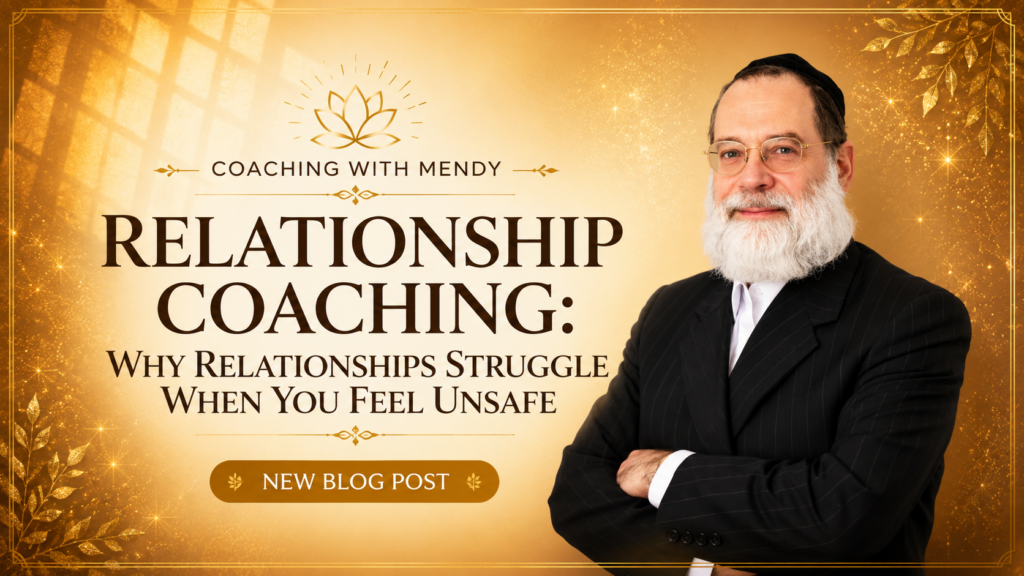
Relationship Coaching: Why Relationships Struggle When Your Nervous System Is Not Safe
You can deeply love someone and still feel painfully alone.
You can care about each other, want the relationship to work, and keep having the same arguments over and over again.
You can promise yourself you’ll communicate differently next time, only to find yourself reacting in the exact same way when emotions get high.
A lot of people assume relationship problems are caused by poor communication alone.
Communication matters.
But in my experience, relationship coaching often reveals something deeper underneath the conflict.
The nervous system.
When your nervous system doesn’t feel safe, it becomes much harder to listen, connect, trust, communicate, or stay emotionally present.
You may want closeness while simultaneously pulling away from it.
You may want connection while feeling overwhelmed by it.
You may love your partner and still find yourself reacting in ways you don’t fully understand.
At Kleins Coaching, I work with individuals and couples to understand how nervous system patterns, attachment wounds, emotional healing, and somatic awareness shape relationship health.
Because many relationship struggles aren’t simply communication problems.
They’re nervous system problems showing up inside a relationship.
Why Your Nervous System Runs Your Relationships
Most people think relationships happen primarily through conversation.
But relationships are happening through the nervous system long before words enter the picture.
Your nervous system is constantly asking:
- Am I safe?
- Can I trust this person?
- Will I be rejected?
- Will I be abandoned?
- Will I be criticized?
- Can I be fully myself here?
These questions often operate beneath conscious awareness.
When the nervous system feels safe, connection feels easier.
You may notice:
- Openness
- Curiosity
- Patience
- Affection
- Emotional availability
- Healthy communication
When the nervous system feels threatened, even in subtle ways, very different reactions emerge.
You may become:
- Defensive
- Withdrawn
- Anxious
- Reactive
- Critical
- Emotionally shut down
Many relationship problems are not caused by a lack of love.
They’re caused by nervous systems that don’t know how to feel safe together.
How Childhood Attachment Patterns Show Up in Adult Relationships
The way we learned connection in childhood often shapes the way we experience connection in adulthood.
This doesn’t mean we are trapped by our past.
But it does mean old patterns can continue influencing relationships until we become aware of them.
For example:
A child who experienced emotional inconsistency may become an adult who feels anxious when a partner pulls away.
A child who learned that emotions weren’t welcome may become an adult who avoids vulnerability.
A child who felt responsible for keeping peace may become an adult who struggles with boundaries.
These attachment patterns often show up as:
- Fear of abandonment
- Fear of intimacy
- People pleasing
- Emotional withdrawal
- Difficulty trusting
- Need for reassurance
- Conflict avoidance
- Hyper-independence
Most people don’t consciously choose these patterns.
Their nervous system learned them.
The good news is that learned patterns can also be changed.
Why the Same Fights Keep Happening
One of the most frustrating parts of relationship pain is repetition.
You have the same fight.
Different day.
Different details.
Same emotional experience.
Why?
Because most recurring arguments are not actually about the surface issue.
The argument about dishes often isn’t about dishes.
The argument about texting often isn’t about texting.
The argument about intimacy often isn’t about intimacy.
Beneath the topic, people are usually fighting about deeper needs.
Needs like:
- Safety
- Connection
- Validation
- Respect
- Trust
- Feeling chosen
- Feeling understood
When those deeper needs aren’t addressed, couples get stuck in loops.
One person pursues.
The other withdraws.
One person criticizes.
The other becomes defensive.
One person asks for reassurance.
The other feels overwhelmed.
The nervous system reacts automatically.
And the cycle continues.
Relationship healing begins when couples learn to understand the pattern beneath the argument.
What Emotional Shutdown Does to a Relationship
Not everyone responds to stress with anger.
Many people respond by shutting down.
Emotional shutdown often looks like:
- Going silent
- Pulling away
- Avoiding difficult conversations
- Feeling numb
- Becoming emotionally unavailable
- Disconnecting during conflict
Partners often interpret shutdown as:
- Lack of care
- Rejection
- Indifference
But many times that’s not what’s happening.
The nervous system is overwhelmed.
For some people, emotional withdrawal was the safest strategy they learned growing up.
When stress rises, their system automatically disconnects.
The challenge is that emotional shutdown creates distance.
And distance creates more fear in the relationship.
Understanding the nervous system behind shutdown creates compassion without excusing harmful behavior.
It helps couples see the pattern rather than simply blame each other.
Why Communication Skills Alone Are Not Enough
Communication skills matter.
Healthy communication can improve almost every relationship.
But communication skills alone don’t solve nervous system activation.
You can learn all the right phrases and still struggle when emotions get intense.
You can know exactly what to say and still shut down.
You can understand relationship dynamics and still become reactive.
That’s because relationship pain often lives below conscious thought.
It lives in:
- The body
- The nervous system
- Emotional memory
- Attachment patterns
This is why many couples feel frustrated.
They understand the advice.
They know the tools.
But they can’t seem to use them when it matters most.
Until nervous system regulation improves, communication skills often collapse under stress.
This is one reason trauma-informed coaching and somatic work can be so powerful.
The goal isn’t simply to communicate better.
It’s to create the conditions that make healthy communication possible.
The Role of the Body in Intimacy and Real Connection
Most people think intimacy is emotional or physical.
It’s actually both.
And the nervous system plays a huge role.
When your body feels safe, intimacy becomes easier.
You may notice:
- More openness
- More affection
- More vulnerability
- Greater emotional connection
- Increased trust
When your body feels unsafe, intimacy often becomes difficult.
You may notice:
- Pulling away
- Avoidance
- Anxiety
- Emotional numbness
- Fear of vulnerability
- Difficulty receiving love
This isn’t because something is wrong with you.
It’s because the body protects itself when it senses danger.
Many intimacy struggles are not relationship failures.
They’re nervous system responses.
Somatic work helps people reconnect with their body so they can experience greater safety, connection, and presence in relationships.
How One Person Doing Their Own Work Changes Everything
A common question I hear is:
“What if my partner won’t do the work?”
The truth is that relationship change often starts with one person.
When one person begins:
- Regulating their nervous system
- Understanding their triggers
- Healing attachment wounds
- Taking responsibility for their reactions
- Communicating differently
The entire dynamic begins to shift.
This doesn’t mean one person should carry the entire relationship.
Healthy relationships require effort from both people.
But individual healing creates ripple effects.
When one person stops reacting automatically, old cycles lose momentum.
When one person brings more awareness, more curiosity, and more regulation into the relationship, new possibilities emerge.
I’ve seen relationships improve dramatically because one person committed to their own healing first.
What Relationship Coaching with Mendy Looks Like
At Kleins Coaching, relationship work isn’t about choosing sides.
It’s not about proving who’s right.
It’s about understanding what’s happening underneath the patterns.
Depending on your needs, our work may include:
- Relationship coaching
- Communication skills coaching
- Nervous system regulation
- Somatic healing
- Attachment pattern awareness
- Emotional healing
- Intimacy support
- Marriage support
- Breathwork
- Personal transformation work
Some clients come as couples.
Others come individually.
Both approaches can create meaningful change.
The goal is helping people feel more connected to themselves so they can show up more fully in their relationships.
Because healthier relationships begin with greater self-awareness.
Frequently Asked Questions
What is relationship coaching?
Relationship coaching helps individuals and couples understand patterns, improve communication, strengthen emotional connection, and create healthier relationship dynamics.
Can relationship coaching help if only one partner participates?
Yes. Individual work often creates meaningful shifts that positively influence the relationship as a whole.
What are attachment patterns?
Attachment patterns are ways of relating that often develop during childhood and continue influencing adult relationships.
Why do we keep having the same argument?
Recurring conflicts are often connected to deeper emotional needs and nervous system patterns rather than the surface topic itself.
Can nervous system regulation improve relationships?
Absolutely. When people feel safer and more regulated, communication, intimacy, and emotional connection often improve significantly.
Do you work with both individuals and couples?
Yes. Relationship coaching can be highly effective for both individuals and couples depending on the situation and goals.
Healing Relationships Starts with Understanding the Pattern
Most people don’t wake up wanting to hurt the people they love.
Most people aren’t trying to create distance.
They’re reacting from patterns they may not even fully understand.
The good news is that patterns can change.
When you begin understanding your nervous system, attachment style, emotional triggers, and relationship dynamics, new possibilities open up.
You stop fighting the same battle over and over.
You start creating more safety, more connection, and more understanding.
And that’s often where relationships begin finding their way back to each other.
If you’d like support exploring relationship patterns, communication struggles, intimacy challenges, or nervous system healing, I’d love to help.
You can learn more about relationship coaching, somatic healing, and breathwork through Kleins Coaching or schedule a discovery call to see if we’re a good fit.