
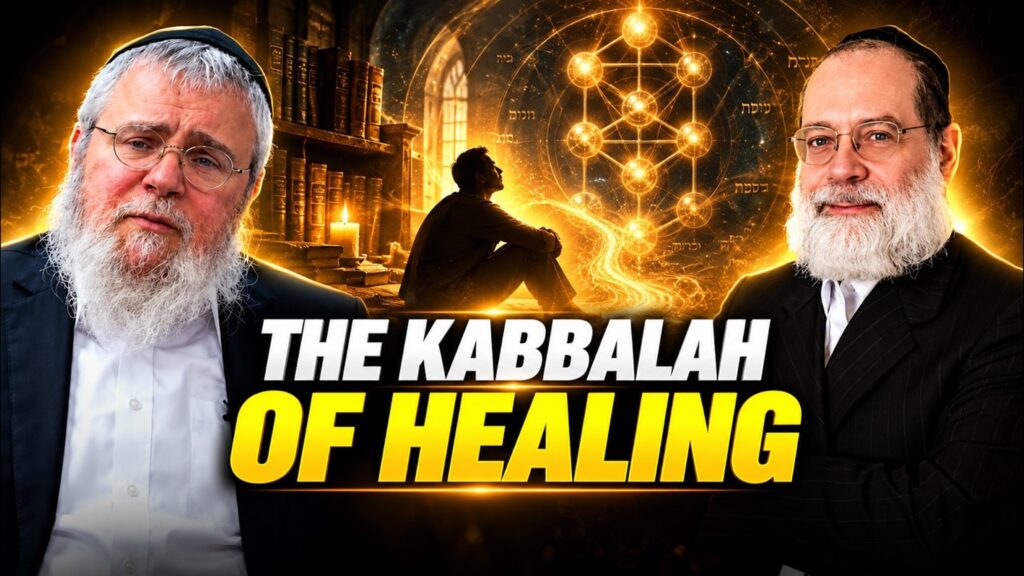
Healing can raise questions that are emotional, physical, relational, and spiritual at the same time. In this conversation, Mendy Klein speaks with Rabbi Pinson about the relationship between therapy, Torah, and Kabbalah, and about how a person’s inner life can be part of the way they make sense of pain.
The value of speaking about what weighs on you
Rabbi Pinson begins with the familiar experience of carrying something difficult alone. He describes speaking with another person as a way to begin easing that burden. Honest conversation does not solve every problem, but it can help someone name what is happening, feel less isolated, and make room for support.
The discussion places this idea in a Jewish spiritual context while acknowledging that there are many different forms of therapy. A trusted friend, a spiritual leader, and a licensed therapist can each have different roles. Knowing which kind of support is needed is part of caring for oneself.
Healing can involve more than one dimension
Rabbi Pinson distinguishes between addressing an immediate physical concern and attending to the emotional or spiritual dimensions that may accompany it. That broader view can help people ask meaningful questions about their values, relationships, and sense of purpose. It should not be used to dismiss physical symptoms or to tell someone that illness is their fault.
For Mendy’s audience, the conversation connects naturally with somatic work: the body and emotions are not always experienced as separate compartments. Paying attention to how a person feels can complement reflective conversation, provided the approach is respectful, voluntary, and appropriate to that person.
Bringing spirituality and professional care together
A spiritual framework can offer language, community, and practices that feel grounding to someone. Therapy can provide a trained setting to explore distress, patterns, and relationships. Some people draw on both. The best fit depends on the individual, and spiritual support should work alongside medical or mental-health care when that care is needed.
A useful reflection is to ask: What am I carrying? Who is safe and qualified to help me hold it? What kind of support fits my beliefs and the concern I am facing? Those questions invite care without promising a quick answer.
Frequently asked questions about Kabbalah, therapy, and spiritual healing
Can Kabbalah and therapy be part of the same healing journey?
Some people draw on both spiritual meaning and professional therapy. They serve different roles: spiritual practice may connect with values or community, while a qualified therapist offers a professional setting to work through emotional and relational concerns.
Can spiritual support replace medical or mental-health care?
Spiritual support should not replace medical assessment or mental-health care when those are needed. Physical symptoms should not be dismissed or treated as a person’s fault. The right support depends on the concern and the individual.
How can I decide what kind of support to seek?
Start by naming what you are facing and what kind of help you need. A licensed clinician can assess health concerns; a trusted spiritual leader may offer faith-based guidance. Some people choose both, with clear roles and appropriate professional care.
Related reading
Read more about the connections among somatic work, breathwork, and Transforming Touch.
Watch the conversation
Listen to Mendy Klein and Rabbi Pinson discuss Torah, Kabbalah, therapy, and the many dimensions of healing.
Watch the full conversation on YouTube
This article summarizes a spiritual conversation for general reflection. It is not medical or mental-health advice.
Looking for support?
If you are looking for support with your own healing journey, explore Mendy Klein’s Programs or book a discovery call to discuss whether coaching, somatic support, or breathwork may be a good fit.
Call Mendy at +1 (347) 977-6675 or email info@kleinscoaching.com. Sessions are available in New York and worldwide via Zoom.
Find Your Way Back to Calm
An 8-week nervous-system and somatic group coaching experience with live guidance, breathwork, and practical body-based tools in a small, supportive group. The next cohort starts December 2026 and is now enrolling.
Explore the program →