
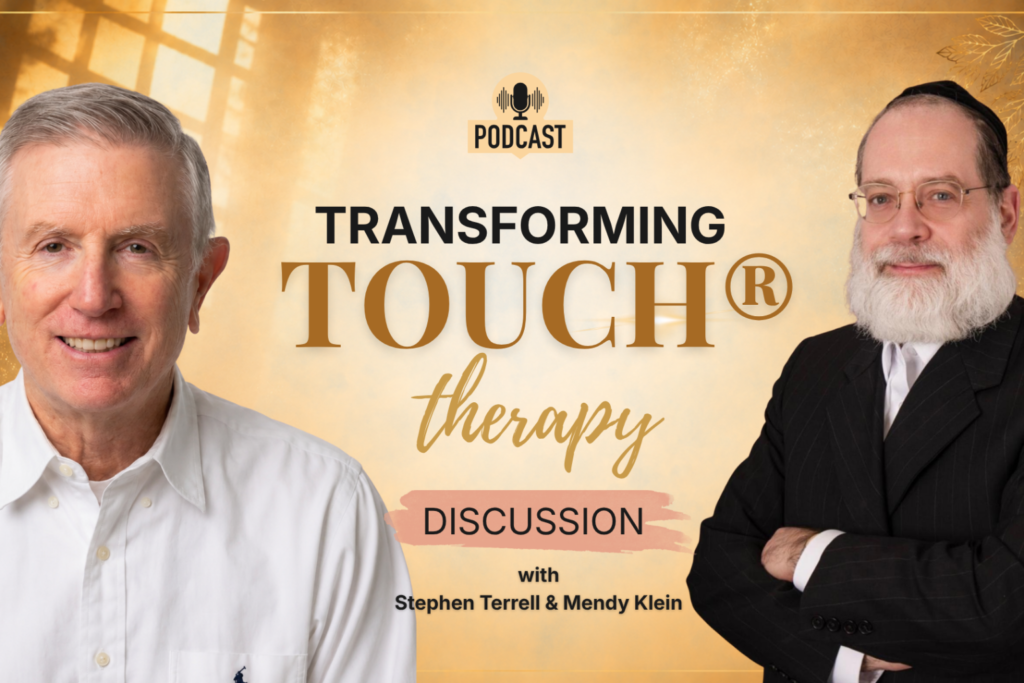
Transforming Touch® therapy has become an increasingly discussed topic in the world of somatic healing, trauma recovery, and nervous system regulation.
In this in-depth discussion, Dr. Stephen Terrell — founder of Transforming Touch® — joins Mendy Klein to explain how developmental trauma affects the nervous system, why healing requires safety and relationship, and how therapeutic touch can support emotional regulation in both adults and children.
The conversation moves beyond traditional “talk therapy” and explores a more body-based approach to trauma healing. Topics include attachment wounds, ADHD, anxiety, addiction, generational trauma, spirituality, emotional regulation, and the science behind somatic therapy.
For people who feel stuck in survival mode, emotionally disconnected, chronically anxious, or overwhelmed in relationships, this discussion offers a powerful new framework for understanding healing.
What Is Transforming Touch® Therapy?
Transforming Touch® is a regulation-focused somatic therapy approach developed by Dr. Stephen Terrell.
Rather than focusing only on symptoms or diagnoses, the therapy works with the autonomic nervous system — the system responsible for fight, flight, freeze, and safety responses.
The goal is not simply symptom management.
The goal is to help the nervous system experience more safety, predictability, and regulation.
According to Dr. Terrell, many emotional and behavioral symptoms are actually protective survival responses developed through trauma.
That includes:
- Anxiety
- ADHD symptoms
- Emotional dysregulation
- Chronic stress
- Hypervigilance
- Addictive behaviors
- Attachment struggles
- Shutdown or numbness
Instead of asking:
“What’s wrong with you?”
Transforming Touch® asks:
“What happened to your nervous system?”
Understanding Developmental Trauma
One of the core topics discussed in the interview is developmental trauma.
Unlike shock trauma where a person experiences a specific traumatic event — developmental trauma happens over time, especially during childhood.
It often develops through:
- Emotional neglect
- Unstable attachment
- Chronic stress
- Unsafe environments
- Lack of emotional attunement
- Inconsistent caregiving
Dr. Terrell explains that developmental trauma is difficult because there may be no “before” version of the self to return to.
For many people, survival mode became normal very early in life.
This can later show up as:
- Relationship difficulties
- Anxiety
- Avoidance
- Emotional reactivity
- Difficulty trusting others
- Chronic shame
- Fear of vulnerability
One important insight from the discussion is that trauma is not only psychological.
It is physiological.
The nervous system stores survival patterns long after the original experiences are over.
The Science Behind Therapeutic Touch
One of the biggest misconceptions discussed in the podcast is the belief that therapeutic touch is “energy work” or something unscientific.
Dr. Terrell explains that Transforming Touch® is grounded in neurobiology and nervous system regulation.
The therapy uses:
- Predictable touch
- Clear consent
- Structured therapeutic contact
- Regulation-focused techniques
The nervous system responds to safety through relationship and sensory experience.
This is especially important because many trauma survivors developed protective responses in relationships.
Touch, when safe and regulated, can help create new nervous system experiences.
Dr. Terrell repeatedly emphasizes:
- Safety
- Predictability
- Permission
- Relationship
Those elements help reduce chronic activation inside the nervous system.
Why Safety Is the Foundation of Healing
One of the strongest themes throughout the conversation is that healing cannot happen without safety.
Many people attempt healing while remaining in constant stress, emotional hypervigilance, or survival mode.
The body cannot fully regulate while it perceives threat.
Transforming Touch® focuses on helping the nervous system slowly move from protection into regulation.
That shift can improve:
- Emotional stability
- Sleep
- Relationships
- Focus
- Learning
- Stress tolerance
- Self-awareness
According to Dr. Terrell:
“We don’t heal alone. We heal in relationship.”
That idea aligns closely with attachment theory and modern trauma research.
ADHD, Anxiety, and Trauma Responses
A particularly valuable part of the interview focuses on ADHD and anxiety.
Dr. Terrell explains that many behaviors commonly labeled as disorders may also function as nervous system adaptations.
For example:
- Hyperactivity may reflect chronic activation
- Avoidance may reflect protection
- Emotional shutdown may reflect freeze responses
- Addictions may function as self-regulation strategies
This does not mean symptoms are “fake.”
It means the nervous system may be attempting to survive in the best way it knows how.
As regulation improves, many people report:
- Reduced anxiety
- Better emotional control
- Improved concentration
- Stronger relationships
- Increased self-awareness
Generational Trauma and Epigenetics
The conversation also explores generational trauma and epigenetics.
Research increasingly shows that unresolved trauma patterns can affect future generations.
Dr. Terrell discusses how trauma experienced by parents or grandparents may influence:
- Stress responses
- Emotional regulation
- Attachment patterns
- Nervous system sensitivity
This is especially relevant in communities impacted by:
- War
- Abuse
- Chronic stress
- Poverty
- Historical trauma
Healing therefore becomes larger than the individual.
It can influence future generations.
Spirituality and Healing
Another unique aspect of the discussion is the integration of spirituality into healing.
Both Mendy Klein and Dr. Terrell discuss:
- Trust
- Silence
- Inner awareness
- Relationship with God
- Listening inwardly
The conversation presents healing not only as a clinical process, but also as a deeply human and relational experience.
This adds emotional depth and authenticity to the discussion.
For many viewers, this combination of psychology, somatic work, and spirituality creates a more holistic understanding of healing.
Key Takeaways From the Discussion
Transforming Touch® focuses on regulation, not just symptoms
The therapy works directly with the nervous system instead of only analyzing thoughts or behaviors.
Developmental trauma affects relationships and emotional regulation
Many adult struggles are connected to early attachment experiences and survival adaptations.
Safety changes the nervous system
Healing becomes possible when the body experiences enough safety and predictability.
Trauma responses are protective patterns
Many symptoms originally developed to help a person survive emotionally.
Healing happens in relationship
Connection, trust, and co-regulation are central parts of nervous system healing.
Frequently Asked Questions
What is Transforming Touch® therapy?
Transforming Touch® is a somatic therapy approach focused on nervous system regulation through safe, predictable therapeutic touch and relational healing.
Is Transforming Touch® scientifically based?
Yes. The work is grounded in neurobiology, attachment theory, autonomic nervous system regulation, and trauma research.
Can somatic therapy help anxiety?
Many people report improvements in emotional regulation, anxiety symptoms, stress tolerance, and nervous system stability through somatic approaches.
What is developmental trauma?
Developmental trauma refers to chronic emotional stress, attachment wounds, or unsafe experiences that occur during childhood development.
Does healing take time?
Yes. Healing timelines vary from person to person depending on nervous system patterns, trauma history, and consistency of support.
If this discussion resonated with you, consider exploring more about nervous system regulation, somatic healing, and attachment-focused therapy.
Watch the full conversation between Dr. Stephen Terrell and Mendy Klein to better understand how trauma affects the body and how safety, relationship, and regulation can support long-term healing.
Subscribe to the Coaching with Mendy Podcast for more expert conversations on:
- Somatic therapy
- Trauma healing
- Nervous system regulation
- Emotional wellness
- Mental health
- Spiritual growth
📲 Connect with Mendy Klein
📞 Phone / WhatsApp: +1 347-977-6675
📧 Email: kleinscoaching@gmail.com
📸 Instagram: @coachingwithmendy
🌐 Website: https://kleinscoaching.com/